About Course
Overview
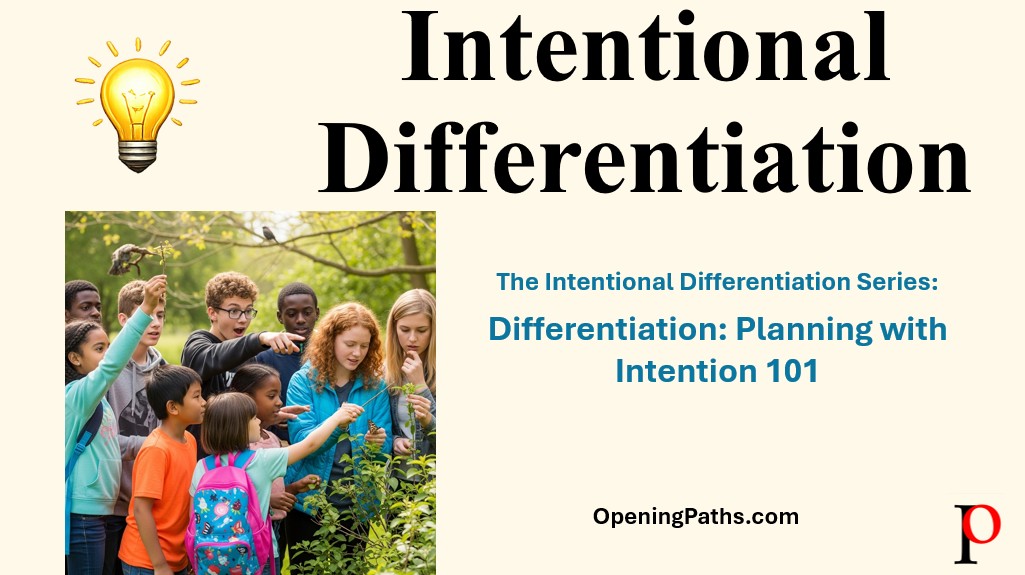
Effective differentiated instruction has a process and structure. In this course, explore a structure and build common language for plannig with intention.
Intentional Differentiation is a planning approach that makes preparing lesson activities to meet learner needs practical and measurable for supporting and tracking learner growth. The terminology is common sense and based on the work done by expansive research of well known eductors, such as Carol Ann Tomlinson, Grant Wiggens, Jay McTighe, Richard DuFour, and others. I’ve ssynthesize their work to infuse into a process that has been successfully used over many years.
The ultimate goal is to raise quality learning by your students. Gain the following to support your practice and of those who you support:
- Understand how Content, Process, and Products make up a sequential planning approach.
- Examine key concepts and terms that help teachers create a clear map for support.
- Explore strategies and AI prompts that get you quickly started on improved differentiated lessons.
Earn a certificate for six (6) hours of asynchronous work. Progress at your own pace.
Opportunity for bonus hours in the certificate
Do you need hours to track professional development requirements? Earn an additional five (5) hours by signing up for and completing an Enrichment Credit Planning Document during the course. This option includes Coaching Feedback that is a recorded review of your completed Enrichment Credit Planning Document.
While this course is standalone, it lays an important foundation for the courses that follow. Educators new to Differentiation will find this course builds a foundation to get started. Experienced implementers of Differentiation will find a clear and practical approach to further elevate their practice and support colleagues.
Course Content
Module 1: Why is Intentional Differentiation Relevant Today?
M1.1: Welcome and Orientation
M1.2: Earning a Certificate for Completing the Course
M1.3: The Learner Challenge for Educators
M1.4: Debunking Myths about Intentional Differentiation
Reflection from the Readings
Module 2: What are Essential Understandings before Starting Differentiation?
Module 3: What is the Core Common Language for Intentional Differentiation?
Module 4: How do I use Learner Data to Plan through Intentional Differentiation?
Module 5: How do I use Teacher Planning Elements for Intentional Differentiation
Module 6: How can we Maximze Intentional Differentiation Assisted by AI?
Module 7: Finale
Student Ratings & Reviews